Posts

While we’re all familiar with government-mandated holidays, thanks to corporate interests, every day of the year now constitutes a celebration of sorts.

Surely you’re aware of National Corn Chip Day, National Personal Trainer Awareness Day, and National Static Electricity Day? All can be found in our current month.*  But we can think of no day we enjoy more than January 15th—National Hat Day!

Perhaps it’s because we tend towards the pragmatic, but wearing a hat on a January morning seems to make a lot of sense (especially in the Northeast). But we also like how this holiday jars us from our usual knit cap approach to reach in the closet for something special.

While there are many choices, from Stetsons to pith helmets to feathered French chapeaus, today we highlight the fez for your consideration. A felt headdress in the shape of a short cylinder, it is named after the city Fez, the kingdom of Morocco until 1927. Because of its impractical nature (as a headdress for soldiers, it made the head a target for enemy fire, and provided little protection from the sun), the fez was relegated over the years to ceremonial wear and was taken up by various fraternal organizations, among them the Shriners, whom we admire for their ability to fit into tiny automobiles.

While we will proudly sport our fez today, rest assured it will be indoors. We have no intention of chasing a blowing hat down 8th Avenue in the frigid winter wind.

So here’s to National Hat Day! We doff our caps to you.

*By some counts, there are over 1,500 national days of commemoration in the calendar. As for SuperOptimist Day? We’re in continual celebratory mode 24/7/365.

New day, old patterns?

If you find yourself making an effort to bust out, yet already backtracking on this promise to yourself, you are not alone.  But rather than being pulled by the forces of same old same old, perhaps it’s time to deprogram yourself once and for all.

“But wait!” you might say. “I’m not part of a cult. Isn’t the term ‘deprogram’ going too far?” We may think we operate on the strength of our own free will, but the truth is, we’re all members of many cults:  The cult of the smartphone, the cult of mindfulness fads, the cult of artesan cheese boards, the cult of “what will my friends think of me if I opt out of all these cults.”

Still questioning your cult status?  Ask yourself, “Is that really me in those retouched Instagram photos, or is it a reflection of belonging to yet another social media cult?”

Here at SuperOptimist Central, we find ourselves similarly brainwashed, most prominently by the cult of Wall Street.  Like Pavlov’s dogs at the sight of a white lab coat, we’ve come to salivate whenever a stock ticker appears in our field of vision, followed by a hit of dopamine when the market is going up.  Of course, we suffer the tug of disappointment when a the numbers are in the red, and a full blown anxiety attack when the losses become precipitous.

We’ve been duped into thinking that our investments are the engine that will provide us the opportunity to one day be “free.”  Yet how much time do we spend being free, as opposed to counting and recounting the amount we need to survive into dementia-land?  You already know the answer.

Still, there’s nothing to be gained by flagellating ourselves; everyone becomes ensnared by the trickery that society imposes. Even the last of the self-sustaining hunter-gatherers, the Bushmen, now face societal pressure to “get with modern life.” Which shows you how insidious the pull of today’s cults can be.

So what can we do about our entrapment? It’s time to deprogram!  While there are experts who can perform interventions to cure you of brainwashing,  here’s a short guide to doing it yourself whenever you’re reaching for the lever in your Skinner box:

  1. Step out of the matrix.  Whether at work, with friends, or in the arms of your family, remember you exist in the middle of a vast scheme that has secretly created all your cravings and desires.  By detaching for a moment, you can see just how nuts the whole kit and kaboodle really is.  This allows you to reassert your power of authority over that next slice of strawberry cheesecake, new car smell, youth-enhancing cream, and mindless responsibility.
  2. Replace materialism with creativity. The best way to get even with cult-like vise grip is to make some art that has nothing to do with success, beautification, or binge-watching.
  3. Seek knowledge from experience, not the internet. All too often when in doubt, we turn to the latest reports, studies, or youtube videos to find out how to handle our problems.  This is another form of cult-like behavior.  Take a walk outside instead.  Instinctively, you know how to handle what you’re facing better than a whole day googling “why do I have body dismorphia when looking at pictures of Olga Sherer.”
  4. Read a good book. Here are some suggestions, but don’t take them. Go to the library and see what your hand touches first.

“My Year of Rest and Relaxation” – Ottessa Moshfegh

“Killings” – Calvin Trillin

“Instant Zen” – Thomas Cleary

“Winnie-The-Pooh” – A.A. Milne

There’s lots more ways to deprogram yourself and reboot your internal mainframe.  But at least these can get you started when you find yourself being tickled by the vagaries of societal conditioning.  Here’s to a great year of disentanglement, and the new adventures it brings!

*It’s interesting that “cult” and “culture” sit close to one another in the dictionary.  When you wander into a Chelsea gallery and see a Jeff Koons play-doh sculpture for $20 million, you realize why.  Best not to confuse the two words or else you’ll join the cult of overpriced art owners!

Lots of people play it safe as they age, and for good reason. “Safe” seems to be a wiser choice than “sorry.” But could it be that we actually have that backwards?

Adhering to a predetermined routine means you know pretty much what each day is going to bring, even before you live it.  In the meantime, the world around you is constantly changing, so the safe path you follow may be more uncertain than you think.

So how do we prevent ourselves from becoming ossified? To begin, The SuperOptimist recommends scheduling at least two risks a week into your calendar. But you don’t have to go skydiving right away. Try a few with a relatively high probability of success to start. Forgo the usual grape jelly and make yourself a peanut butter and honey sandwich instead. Break the routine and stroll down a different block on your way to the office. Turn off CNN and watch a video that offers insight into the nature of chance and probability.* Set your alarm for 5:00 am one morning and take in the sun rise. (Odds you can pull this off and not snooze alarm yourself back to 6:30? Let’s say 3 to 1).

Getting the hang of it?  Now you’re ready to double down on risk, where your adrenals kick up a notch and your sweat glands activate as you actually experience the shock of the new. Take a month’s pay and visit your local casino for a few spins of the roulette wheel. You could win enough to pay off your mortgage, or you might find yourself without any money for next week’s grocery tab. Audition for an off-off Broadway show, despite your lack of acting experience. Your long shot might pay off in a featured role, or you could be driven from the theater with catcalls and brickbats.  Approach a stranger and say hello.  It could spark a new friendship.  Or maybe not.

No matter what happens, the chance of you coming out on top is 100%! That’s because whether you win or lose, succeed or fail, you get to face your fears, collect more information for the next time, and have a swell story to tell your friends back at the salad bar, water cooler, or locker room (where they’re doing exactly what they did yesterday. But not you!).

Want to know more about the benefits of risktaking? Here’s what a cognitive researcher from Carnegie Mellon has written on the subject, and here’s why risk-takers are a smarter breed of human, according to scientists in Finland.

Vive la difference, et bonne chance pour la nouvelle année!

*Other words to add to your vocabulary include: odds, uncertainty, randomness, fortune, fate, hazard, unpredictability, and surprise.

Happy holidays! Here at SuperOptimist headquarters, we favor meditation as a way of detaching from the madness of the material world and connecting with the universal truths that transcend trade wars, social media, and the quandary over wishing someone a “Merry Christmas” vs. a “Happy Holiday.”

To that end, in the U.S. a person interested in “mindfulness” is often told to begin their practice by meditating 20 minutes a day. They’re also encouraged to download a Headspace app, buy a special cushion and mat, purchase a statue of the Buddha, and sign up for a weekend retreat in the Catskills.

In India, it’s a bit different. There, a teacher would tell a beginner to start by  meditating 6 hours a day — no questions asked.

So how do you go from 0 to 6 hours all at once? Teachers encourage the practice of “Japa;” repeating a mantra or a divine name over and over again so it takes root in the mind.  Whether you choose “om,” “1-2-3-4,” “hare krishna,” or “cocoa butter” filling the mind with a simple word or sound will lead the practitioner away from the grasping, clinging and suffering generated by material world thinking and move you towards a higher realm of existence.

Sure, 6 hours of meditation a day may seem excessive. But if you want to rid yourself of anger, fear, sadness, and petty grievances (and gain the benefits of pure consciousness), why not give it a whirl?

The truth is, whatever practice you undertake can ultimately grow to 24 hours a day. It goes beyond sitting on a custom made zafu waiting for the chimes on your iPhone to go off.  Every waking moment you can actually be awake!

If you find this hard to do, we recommend you join a like-minded sangha, or spiritual group, so you may gain energy from others on the same path. Here’s one in the northeast where you’re always welcome.

In the meantime, may we all give a cheer for Jesus of Nazareth.  Whether or not he was the son of God, he was surely a bodhissattva with his message of love and tolerance.  No doubt he’d appreciate us putting aside our supposed differences to remember we’re all just flesh and blood. (And teeth that we can flash, if we’re so fortunate.)

*Notice the pictures of the monk and Jesus laughing. Our petty concerns would certainly elicit a chortle from both.  True, you often see them depicted as serious and dour.  But the monks we know have a great sense of humor.  We’re taking the leap and assuming Jesus did as well, since he was human like the rest of us.  Considering that every night Jesus would sit around a camp fire with twelve guys after a long day of speechifying and miracle work, it stands to reason there would be plenty of room for a few guffaws.

One of the most unpleasant tasks a present-day human can undertake is making the dreaded “phone call to customer service.”

A typical experience might involve, oh, say Verizon Wireless and a customer representative named “Cyrus.”* After waiting on hold for the requisite 25 minutes — a length the company hopes will provoke you to abandon your quest — the endless loop of grocery store jazz clicks off.

“Hello, thank you for calling Verizon customer service, my name is Cyrus, how can I help you?” comes a less-than-ebullient voice, hoarse with (presumably) cigarettes and coffee.

“I want to cancel my account,” you say with practiced authority.

There’s a long pause. Too long.  “Are you there?” you ask. Cyrus clears his throat, then asks for your first and last name, and the phone number associated with your account. You spell both names out so he’s crystal clear, and slowly recite the digits so he has time to type them correctly. Long pause. He asks you to repeat all your information again.  You do.  He asks you to spell your name again.  You clench your teeth. Now again with the phone number. Really? You wonder if Cyrus is in need of a quality hearing aid.  Or perhaps Verizon teaches him to torture you as much as possible.

Now Cyrus asks how he can help you.  You repeat your request. “I am calling to cancel your account and I want to assure that this takes place today, as I will no longer be paying an exorbitant bill for services that don’t measure up.”

Another long pause. Cyrus tells you he’s very sorry to hear that, and he will do everything in his power to assist you. Then comes a bombshell. “Unfortunately, I must tell you all the systems are down at the moment.”

You take a deep breath. You’ve prepared for this sort of dodge, so you ask Cyrus if there’s a street address he can give so you can write Verizon and cancel your account that way. He says no, the only way to cancel an account is through a customer service representative like himself, except of course that the systems are down so there’s nothing he can do right now.

You remind Cyrus of the Verizon promise, which reads: “With a positive culture and integrity throughout, the Verizon customer service team is one of a kind.” he hears you out without commenting. You then tell Cyrus you’ll be cancelling the recurring charge for Verizon services on your credit card in two days, so you demand he take your information down and then call you back when the system is up and he can cancel your account.

He says he will definitely take your information down, what was your name again? You repeat your name through teeth so clenched you fear you might crack a molar, and he asks how to spell it, for the third goddamn time. You spell it again for him. There is a long pause and he says sure, he will take care of this when the system comes back on line and give you a call back.  When can you expect to hear back from him? you wonder. Cyrus says he’ll “most likely” call you before the day is out.

But you don’t believe him.  Why should you, he’s done nothing but stonewall since the conversation began. You ask for his last name, the name that comes after Cyrus, for with his full name you can make sure he’s held accountable for his actions. He says he can’t tell you that, it’s company policy. You ask if you can have his extension number, so you can stay in touch with him and not one of the other 40,000 customer service representatives there to not help you. He says unfortunately he doesn’t have an extension, none of them do, that should you call back you’ll be helped by whichever one of the 40,000 unhelpful CSR’s answer the phone first, and adds that the individual could be anywhere in the world.

So after all that, after 49 minutes of your day that you’ll never get back, you do the unthinkable. You thank Cyrus.  You thank him because even though you know he won’t be calling back, there’s still a shred of hope that he will.  You hang up, defeated.

So what are the positives in all this?

  • You took action and made the call, knowing deep down that nothing would be accomplished. In SuperOptimist practice, this is known as “detaching from the outcome.” Maintaining equilibrium regardless of success or failure is a big step towards achieving nirvana.
  • You held back from calling Cyrus a “stupid f(&#@ c&*.” This shows that you retain level of empathy for your fellow human, who can’t help it if working in a call center in South Carolina is the best he can do at present.
  • You avoided telling Cyrus of the possibility that an explosive device could be detonated at his particular call center (a head fake, for sure, but perhaps effective to spur action from a minion at the multinational telecommunications conglomerate.
  • You are able to “defervesce” when you hang up the phone, adding a new word to your vocabulary in the process.
  • You decided that the $40 a month you’ve been wasting on the Verizon GoUnlimited plan you no longer use really isn’t that much to spend to avoid another call with the likes of Cyrus.  So you’ve detached from money too, which you’ve been trying to do for awhile now and maybe, just maybe, this is the experience that will free your mind from ever worrying about such petty matters again.  (Or at least until you get next month’s bill.)
  • You give yourself a gold star for all of the above.

* Verizon was chosen from a myriad of corporate behemoths who operate customer call centers. We could just as easily have featured Amazon, Wells Fargo, or 1-800-My-Pillow as teachers of transcendence for this experiment.

Whereby we examine why some people don’t vote, and offer remedies for this situation, including one utilized by none other than the first president of the United States.

While the cable news networks argue that the coming midterm elections are “the most crucial in our lifetime,” it’s still likely that a vast swath of registered voters won’t bother to show up. This despite a plethora of well-meaning public service announcements, editorials, cold calls, and celebrity tweets. Even if the turnout is high for a midterm, we can anticipate 40% of the electorate missing in action.

For those of us who will cast a ballot on November 6th, it’s easy to feel morally superior to the no-shows (especially if their votes could help our favorite candidates emerge victorious). But rather than look down our nose at our fellow citizens, perhaps we should examine why so many people fail to exercise their constitutional right — and then do something to improve this situation.

First off, election day isn’t a holiday, but it should be.  While white collar urban professionals need only walk a few blocks from their doorman buildings to their polling places, many of the working poor must travel a good distance to cast their ballot.  When you consider that many are working more than one job to feed their families, taking a few hours out of a day is not an option.

This is on top of the costs associated with voter ID requirements. A study from Harvard Law School estimates that when everything is tallied up, the cost of voting can run between $75 and $400.  Free country, you say?  Not for the 99%.

How can we rectify the injustices of our current election system?  Perhaps we should take a cue from our founding fathers and mothers. In the early days of our democracy, they respected the effort it took for farmers, laborers and townspeople to trek to the ballot boxes.  Political candidates would offer voters food and drink, evenhandedly giving “treats” to opponents as well as supporters.  A barrel of flour or a live pig could also used as an enticement.

Perhaps you believe such “pay to play” activity is morally wrong. Certainly George Washington did when he refused to supply free booze during his first run for office. But after he lost his bid for a state seat in Virginia, he earmarked a tidy sum for refreshments for his followup campaign.  Needless to say, he was more successful the second time around.

Another option is to take the grog out of the hands of the candidates, and put it into the restaurants of the people. Again, back in the 1700s, quite a few polling places were located inside saloons. And why not? Showing up to a cold, cavernous public school, library or town hall doesn’t exactly send the spirit soaring.  We could just as easily tap our local pizza establishments and barbeque joints to host election day.  Simply produce your ballot stub and the first pulled pork sandwich is on the government!

If offering sustenance to voters still makes you uneasy, how about combining the act of voting with the chance to win a large cash prize? Say, institute a national lottery which offers every voter who casts a ballot the opportunity to win a few million bucks. It’s not as outrageous as you think; this very notion was on one state’s ballot in 2006. The “Arizona Voter Reward Act” proposed that one lucky voter would claim the grand prize every time there was a major election. Proposition 200 would have provided the money by transferring unclaimed lottery winnings into a separate Voter Reward Fund, to be overseen by the Arizona State Lottery Commission.

Alas, the measure was defeated, 67% to 33%, thanks to the naysayers who wished to protect “the integrity of our elections.”  They argue that inducements such as lotteries and giveaways would get more people who are ill-informed to participate in our elections. But ill-informed according to whom? Sean Hannity?  Rachel Maddow? A law professor from ASU? And what of the large sums of cash given directly to candidates by the well-heeled, the corporations and their lobbyists? Are we to assume that’s a fair way of buying an election, but a free meatball hero at the polling station is verboten?

Let’s sidestep the sanctimony, and put the fun back into fundamentals of democracy.  If we start the campaign now, we can look forward to a 90% turnout in 2020!

*At the very least, making it less onerous to vote would be a step in the right direction.  Many countries, including Sweden, Germany, and Chile, make voter registration automatic for every citizen.  Take the time and expense of travel out of voting would also be welcome. Oregon, Colorado and Washington have instituted vote by mail systems and in the last midterms, turnout in these three states was 65.7%, vs. 48% nationally. (They also save their taxpayers millions of dollars by doing it this way. Which could be put towards the lottery idea.  Just saying.)

 

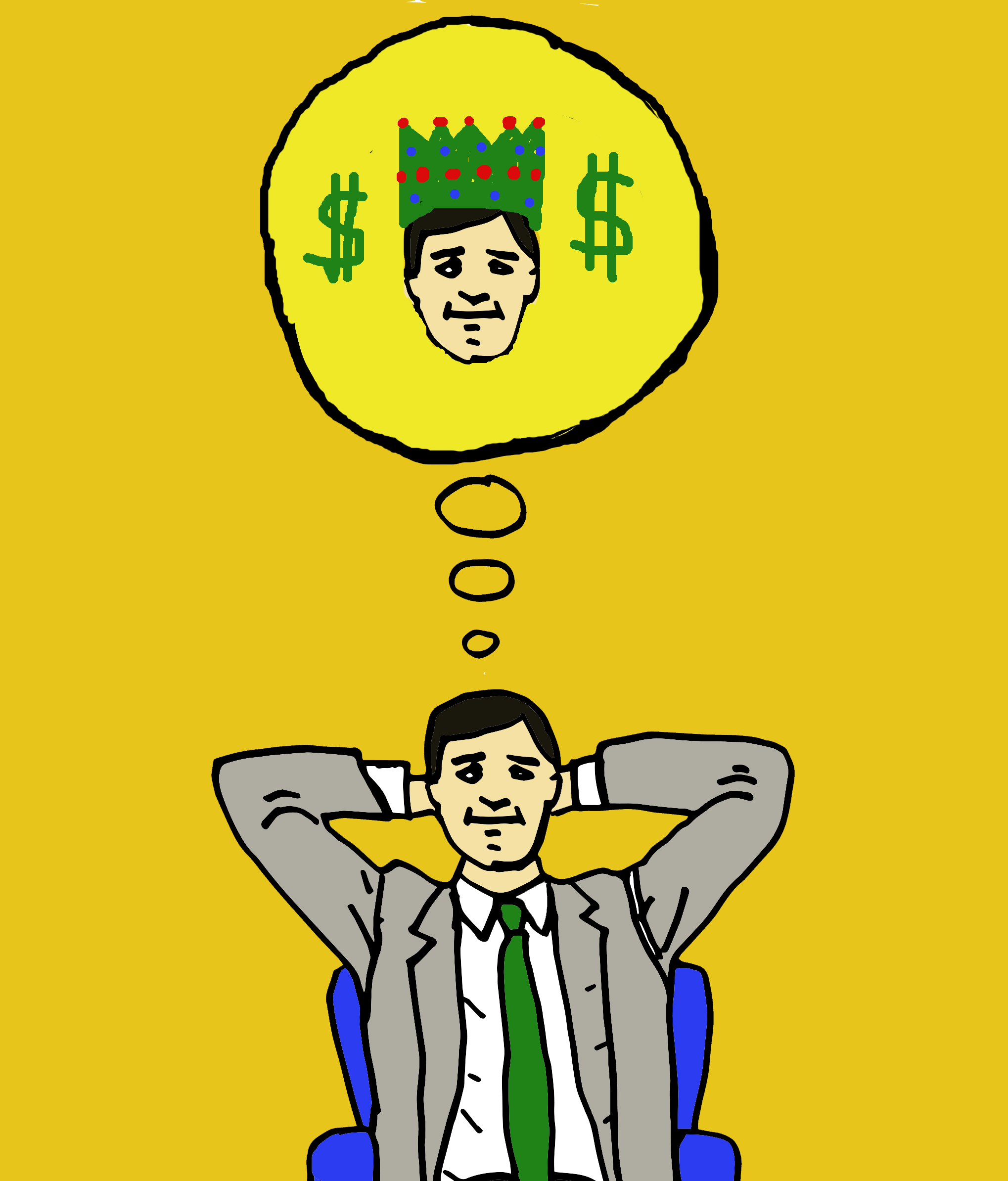
Many people put $2 in an office pool each time the lottery rises above a certain number…say $100 million. Then, after many, many months of not winning, they start to question the practice. “Christ, I’m out $200 already with nothing to show for it. Maybe I should stop playing.”*

There are two major problems with that statement. First off, you do have something to show for it — hope! For the next several hours, you get the opportunity to fantasize about your instant fortune and the dreams it will finance.  That’s enough to make the expenditure worthwhile; even a double espresso can’t jack your spirits any higher.

Give yourself ample time to reflect upon your new life.  Being the selfless giver you are, you’d give half of it away to deserving non-profits. That still leaves you richer than Croesus.  Maybe you’d buy an island. Maybe you’d start a biker gang and buy everyone matching Indian motorcycles. Stretch your imagination: you’ve paid for the privilege!

Furthermore, each time you enter the office pool, you increase the odds of your group winning. The more tickets, the better.  Not just for you, but for everyone. So you’re helping others as you help yourself.

But the biggest reason to continue to play the office pool? Knowing what will happen the day you don’t play the office pool.  They’ll win, and you’ll be watching everyone celebrate while staring into the abyss.  This will lead to chronic depression, sickness, problem drinking, even death.  $2 not to contemplate dying alone in an SRO while your former office mates are driving by in their Maserati Sport Convertibles? Well, that’s the greatest gift of all!

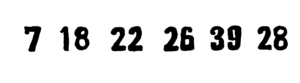
Here are a few numbers that came to us while we were putting together this post.  We offer them to you with our compliments. Naturally, we welcome your generosity if they come in.

*Doing a quick search on “odds of winning the lottery” only confirms ambivalence as the rational response.  At any average of 180 million to 1, you have a better chance of being eaten by a shark**, knocked into the next world by a meteor impact, or being offed by flesh-eating bacteria. Still, you can’t win it if you’re not in it.

**Please refrain from swimming if the lifeguard is away from her station.

Moving slow? Feeling snarky? Having trouble getting started? Now that it’s back to “la course de rat,” you may well be cursing what society has labeled the worst day of the week. 

But here’s the good news: Monday is not the ungodly descent into Hades we’ve been conditioned to think.

A recent survey revealed that day-of-the-week stereotypes (i.e., “Monday blues”, “Wednesday hump day”, “TGIF”, etc.) were only pronounced when subjects predicted their moods for each day of the upcoming week.  Which means if you reframe today as “tolerable” or even “pleasant,” there’s every chance you can bury the Monday stigma and the angst it can cause.

So what’s Monday got going for it? First off, you’ve probably stored up a few more winks thanks to “no alarm Saturday” and “slept through church Sunday.” Plus, two days away from the office is a restorative in itself. That’s good, solid energy you can draw upon during the course of the day.

Then there are the remarkable stories you can spill to your work mates regarding your blissed-out triumph of a weekend.  Like how you piloted your 40-foot sloop to victory in the local regatta and then rolled sevens at the World Dice Championship. (And don’t forget the models.  Of course there were models!) Remember, everyone exaggerates his or her own adventures. Feel free to do the same.

Finally, Monday gives you the perfect excuse (“for christ sake, it’s Monday”) to drag your heels a bit before you tackle that inbox full of projects, deadlines, and ass-ripping notes from your churlish supervisor.

If you really want to really bitch about a day, try Tuesday. That’s when the work has backed up, the boss is getting testy, and the heavy-duty shit hits the fan. Yep, Tuesday’s the day you’re most likely to work through your lunch break due to the realization that you screwed around on Monday, and now you’re behind the 8-ball.

In fact, almost one in five employees will leave the office late on a Tuesday, as they work after hours to salvage the week after putting in a poor effort the day before.

So rather than predetermine that Monday is going to suck it big time, why not look at the facts. And then enjoy showing people your pictures from that Saturday evening rave, where the cops arrested everyone but you!

Enjoy your Monday.  You’ve earned it.


Anybody who tries to sell us a quick remedy for obesity, a fountain-of-youth formula, or a miracle cure for back pain is usually called a cheat, a charlatan, or a cur.

But is that fair assessment of snake oil salesmen? Not necessarily!

As it turns out, snake oil does have measurable health effects, assuming you’re using the authentic formula derived from the fat of the Chinese water snake. This fat is processed and refined into a concentrated oil that possesses high levels of EPA, an omega-3 fatty acid directly linked to a number of benefits for human health.

So while the term “snake oil” is derisively used to label fraudulent medical remedies or shady wheeler-dealers, the EPA found in the original blend can indeed loosen up stiff joints and relieve inflammation in various parts of the body.  It also has analgesic properties which makes it a popular balm following an injury or surgery, or during a chronic illness that causes constant pain. Used as a rub, this oil can also speed up healing of wounds and injuries.

Not only that, if you find yourself blowing a gasket without a good explanation, rub a small amount of snake oil on your temples, or apply it to your chest, and feel your mood improve.  And don’t forget the scalp! The traditional use of snake oil includes massaging small amounts into the cranium in order to prevent hair loss.*

But Caveat Emptor, as Carnival Bob always says. There are plenty of snakes in the world, but their venom doesn’t contain the level of EPA that will help cure your ills. American patent-medicine peddlers of the late 1900’s sold liniments labeled “rattlesnake oil”, but the oil of rattlesnakes has 1/10th the level of omega 3 that the Chinese water snake has.

*We’re also perfectly comfortable with male pattern baldness, as it provides a boost for sales of hats and sunscreens vital for the U.S. economy.


There’s an ancient proverb that states: “If your own house is not in order, how can you possible help another to tidy up theirs?”

So before offering a hearty handshake to a friend, colleague, or local law enforcement officer, we suggest you start with yourself first.

Clasp your hands together. Doing so is a great way to get in touch with yourself, get centered, and remember “I am here now.” There’s a reason your own two hands clasped together is the inter-cultural symbol of prayer and spiritual growth.

Try to pay attention to what your hands feel like. Grab a knuckle and study your wonderful opposable thumb, the keystone of humanity’s progress. Those hands are loaded with more nerve endings and wired with greater familiarity to your brain than any other part of your body.

When you explore what your own hands feel like you can learn things about your own body, your temperament, your personality. Are they hard and tense — or soft and supple? Warm or cold? Damp or dry? If they’re dry, you might enjoy reaching for one of the 5,000 commercial hand moisturizing products and see how that feels.*

Saluting yourself, adoring yourself and sparking the divine in yourself is a great way to start the day. So slap ‘em together, give your own hands a good shake and say “hello, adorable friend.”

*While we are not endorsing any particular hand cream, lotion or balm, we do recommend choosing one that’s unscented.